How a Piston Check Valve Works in High-Pressure Steam Lines?
In high-pressure steam lines, piston check valves are very important one-way flow controllers that stop backflow instantly when the pressure upstream drops. The piston moves through a cylinder-shaped disc that is inside a vertical room. A spring force and reverse pressure hold the disc against the seat. When there is enough force from the forward flow of steam, the piston moves up and lets the steam pass. When the piston stops moving forward, the spring immediately returns it to its sealed position, stopping reverse flow before it starts. This is an important safety feature that keeps boilers, turbines, and condensate systems safe from harmful hydraulic shock and equipment damage in industrial steam distribution networks.

Understanding Piston Check Valves in High-Pressure Steam Lines
What Is a Piston Check Valve and How Does It Function?
A piston check valve is a special kind of non-return valve that was made to work in harsh high-pressure steam settings. A precisely machined piston that moves horizontally within a guided chamber is at the heart of the device. When the steam runs in the right direction, the difference pressure is stronger than the spring resistance, which moves the piston off its seat. This pattern of vertical movement makes sure that the system stays solid even when the flow is rough, which is typical in steam systems that are at least 600 psi. When the forward flow slows, the built-in spring and any reverse pressure push the piston back onto the seat. This makes a bubble-tight seal that stops backflow before it can cause damage.
How the Piston Mechanism Controls Flow and Prevents Reverse Flow
This type of valve is different from swing or lift check designs because the piston moves along a guided path. Centering ribs or guide posts keep the piston and seat perfectly aligned, which gets rid of the side-loading forces that wear things down too quickly. This controlled action has two very important benefits: it closes quickly, which reduces the amount of reverse flow, and it seats consistently, which keeps the seal leak-tight cycle after cycle. When using steam, condensate can build up during shutdown. The spring-loaded piston check valve stops gravity draining, which would otherwise let harmful steam hammer hit downstream equipment when the system starts up again. The weight and tuning of the piston's spring can be changed to match specific system pressures. This makes sure that the system works reliably even when the load changes, which is common in industrial and power generation facilities.
Key Design Features for Steam Resistance and Reliability
The choice of material directly affects how long a valve lasts in high-temperature, corrosive steam service. The bodies of premium piston check valves are made from ASTM A217 WC9 chrome-moly steel or ASTM A351 CF8M stainless steel, and they can work continuously at temperatures up to 1000°F. The piston is usually made of strengthened stainless steel (17-4 PH or 316SS) to protect it from wear and tear from fast-moving steam and particles that get sucked in. Seats have either Stellite or Inconel layers on metal-to-metal hard-faced surfaces that don't leak at all, or they have graphite-reinforced PTFE plugs that are strong enough to withstand temperatures up to 450°F. Materials used for springs must not let stress relax at high temperatures. Chrome-silicon alloy springs keep their load features constant through thousands of heat cycles. Connections that hold pressure meet ASME B16.34 requirements and have socket-weld, threaded, or flanged ends that can handle service levels from 300 to 2500.
Benefits and Applications of Piston Check Valves in Steam Systems
Core Advantages in High-Pressure Steam Environments
Piston check valves improve performance in a way that can be measured. This leads to direct cost saves and lower risk. The spring-assisted closure mechanism actively stops water hammer, which is a damaging pressure rush that happens when steam flow quickly changes direction and hits a disc that closes. The overflow speed tells traditional gravity-dependent check valves to slam shut, sending shock waves over 10,000 psi at once. When piston designs stop, they do so before there is a lot of backward flow. This keeps pressure spikes to levels that can be handled, which protects the pipes and extends the life of the system. The vertical-flow orientation is good at dealing with condensation. Unlike horizontal swing checks, where liquid buildup slows down reaction, vertical piston valves naturally drain condensate through the seat area, keeping them ready to close right away. The pressure drop properties stay good, and well-designed piston valves have flow factors that are similar to globe valves of the same size. This means that less energy is lost in systems that distribute steam at speeds of up to 300 feet per second.
These performance traits help drilling engineers and plant workers with certain problems they are having. Reliable backflow prevention keeps boiler feedwater pumps and heat recovery equipment from getting damaged by rotating backwards. This makes the system safer. Getting rid of water hammer lowers the strain stresses on pipe supports, expansion joints, and tank connections, which makes equipment last longer. Guided piston motion spreads wear evenly, so maintenance times are longer. This is because side-loaded swing disc designs tend to have uneven wear patterns. Procurement managers like that documented reliability cuts down on unplanned shutdowns. This helps keep production plans safe in chemical and refinery plants where steam interruptions can affect many processes that are related to each other.
Critical Applications Across Industrial Sectors
Plants that make electricity use piston check valves a lot during the steam cycle. These valves are used after injection pumps in boiler feedwater systems to stop reverse flow that would drain pump cases during emergency stops. Check valves are needed on the extraction steam lines that heat the process so that the turbine stages don't get damaged by backflow when the load drops quickly. Piston checks are needed in condensation return systems to keep the pressure level high and stop flash steam from going backwards into gathering tanks.
On steam distribution headers that serve fired heaters, distillation column reboilers, and heat transfer networks, petrochemical plants place piston check valves. The valves keep the header pressure stable for working units by isolating the steam when individual units shut down. Chemical processing plants use these in reactor jacket heating circuits, where accurate temperature control affects the safety and quality of the product. Midstream pipeline workers use piston check valves on steam-jacketed transfer lines that carry heavy crudes and bitumen. If the flow changes directions, the product solidifies and the line gets blocked.
Comparing Piston Check Valves with Other Check Valve Types for High-Pressure Steam Lines
Piston Check Valves Versus Swing Check Valves
Swing check valves have a disc that is movable and opens when flow goes forward and closes when flow goes backward. Because of this basic difference, performance patterns are different. When installed horizontally, swing checks work best because gravity helps close the loop, resulting in less pressure drop and easier building. But steam service shows the disc's limits: it has to fully turn around before sitting, which lets a lot of return volume happen and causes water hammer. The long trip circle makes it take a long time to react to changes in flow, which can be a problem in systems that cycle a lot. Gravity help is useless in vertical upward flow situations, which often cause disc wobble and fast seat wear.
These problems are fixed by piston check valves, which move axially on a spring. Because the trip distance is shorter, the valve can close in milliseconds instead of the full second that is usually needed for swing checks. This greatly reduces the volume of backward flow. Because spring force makes sure that the piston seats properly no matter how it is installed, piston designs are perfect for vertical steam pipes and situations where flow can go in more than one way. The directed piston action gets rid of disc wobble, which causes uneven wear and increases the life of the part in erosive steam service. When moving from swing to piston designs in high-cycle uses, maintenance managers say it takes three to five times longer between overhauls.
Performance Trade-Offs with Alternative Check Valve Technologies
In ball check valves, there is a sphere that floats freely and rolls into a seat cone when the flow changes directions. Even though they are very easy to use and don't cost much, ball checks have trouble with being effective in steam service. The ball can't regularly find the center because of growth of condensation and scale, which leads to leakage. Lift check valves have a guided disc like piston check valve or piston valves, but they don't have a spring to help them close. Instead, they rely on reverse pressure alone. This passive method responds more slowly and lets more backflow through than spring-loaded piston valves.
Wafer check valves have very small measurements on the front and back, which makes them useful in places where room is limited. Dual-plate wafer versions have half-discs that close quickly and are loaded with springs, making them work like piston valves. However, the thin shape limits the highest pressure rating; most wafer checks stop at Class 300 (720 psi at 100°F), which is too low for high-pressure steam uses that need more than 1000 psi. When pressure rating, tight shutoff, and long-term reliability are more important than space and cost, piston check valves are still the best choice. This is often the case in oil and gas drilling, refinery steam systems, and power generation facilities where equipment failure can have serious safety and financial consequences.
Procurement Guide: Buying the Right Piston Check Valve for Your Steam Lines
Critical Specification Parameters for Valve Selection
Pressure grade is the main factor used for choosing. Find the maximum allowed working pressure (MAWP), making sure to include a safety margin. Choose valves that are rated at least 25% above usual operating pressure to handle short-term pressure spikes. Standardized ASME Class grades show how pressure and temperature relate to each other. For example, Class 300 can handle 720 psi of full steam up to 500°F, Class 600 can go up to 1440 psi, and Class 900 and 1500 are for ultra-high-pressure uses. When measuring temperatures, they must take into account superheat conditions. Materials that work well in 1000°F full steam service may not last as long in 1050°F superheated service. Connection type affects how flexible a system is and how likely it is to leak. Socket-weld ends are best for fixed installations in important service, flanged connections let you take them off for inspection, and threaded ends are best for low-pressure backup systems.
Material suitability includes all wetted parts, not just the body and trim metals. Check that the metals you choose can handle the corrosive substances in the steam. For example, 316SS is needed at a minimum in industrial uses where chlorides are present to avoid stress corrosion cracking. For a piston check valve, make sure that the seat material has a strength difference of at least 150 Brinells from the piston material in order to make a wear-resistant contact. Flow coefficient (Cv) data lets you figure out the pressure drop; choose valve sizes so that the steam rate stays below 150 feet per second to avoid noise and damage. Industry certificates prove the quality of the production process and the ability to track down materials. API 6A certification proves it can be used for oilfield wellhead service, API 6D certification covers pipeline uses, and PED compliance allows sites in Europe.
Evaluating Manufacturers and Ensuring Quality
Choosing a dependable valve maker has an effect on the long-term success of operations. Established providers have ISO 9001 quality management systems that include written processes for buying materials, controlling the manufacturing process, following testing routines, and keeping track of everything. API monogram holders are periodically checked by a third party to make sure they are following technical specs and quality standards. EPC companies and drilling engineers value this as a sign of trustworthiness. Check out the manufacturer's test records. Reliable companies will give you mill test results for materials that can handle pressure, records of dimensional inspections, hydrostatic test certificates at 1.5 times the design pressure, and seat leakage testing according to API 598 or ISO 5208 standards to show that the close is solid.
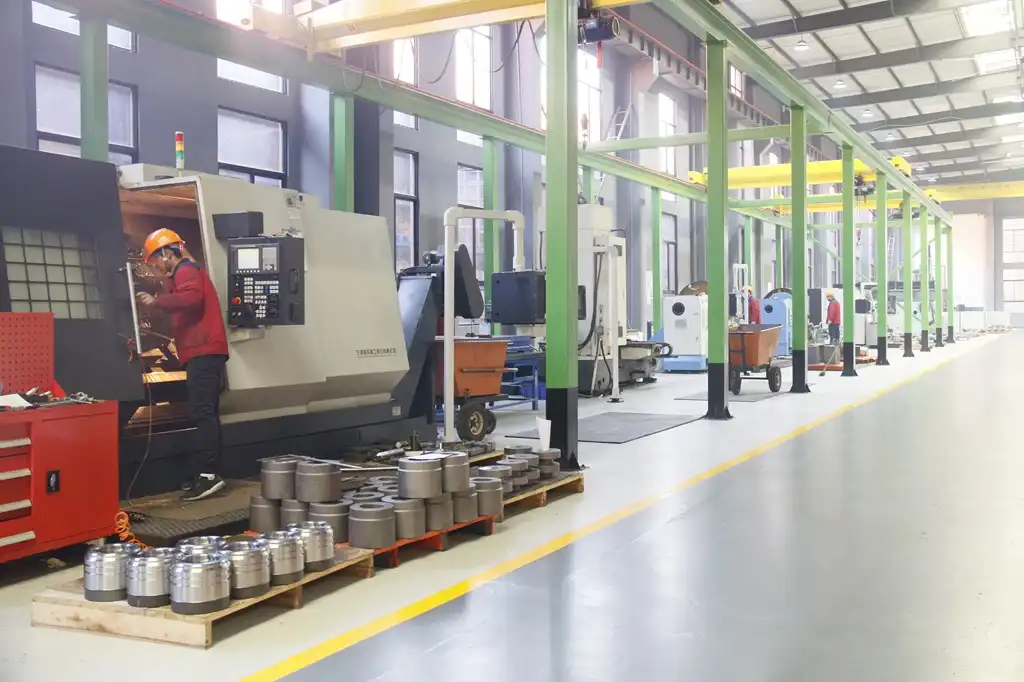
A supplier's manufacturing skills show if they can meet the needs of a project. Make sure that the company has its own drilling and heat treatment tools so that it doesn't have to rely on outside companies to do important work. Check to see if there is access to engineering support. Skilled application engineers can help you choose the best valves and give you detailed advice on how to install and maintain them. Customization is necessary for EPC projects that need certain types of connections, unusual materials, or changes to the size to fit existing infrastructure. Delivery performance and after-sales support are what set great sellers apart from average ones. Drilling operations and refinery turnarounds are time-sensitive, and late deliveries cause expensive delays. For these reasons, reliable lead times and fast shipping choices are important factors to consider when buying.
Conclusion
The spring-loaded, guided-closure design of piston check valves makes them the most reliable choice for high-pressure steam lines. This is because they actively stop backflow and remove damaging water hammer. Knowing how things work, what materials are needed, and how to maintain them lets you make smart purchasing decisions that improve system safety and lower costs over its lifetime. Compared to swing, lift, and wafer options, piston check valves work best in tough conditions that need fast response, tight cutoff, and the ability to work in multiple orientations. Making sure that the pressure rates, materials, and standards are correct is important for making sure that they work with the needs of oil and gas drilling, refining, petrochemicals, and power generation. Project plans and equipment investments are kept safe by choosing makers with proven quality systems, technical know-how, and reliable delivery. Systematic inspection and regular maintenance can help valves last longer and reduce unplanned downtime in important steam distribution systems.
FAQ
1. Can Piston Check Valves Handle Extremely High-Temperature Superheated Steam?
When made from the right high-temperature metals, good piston check valves can handle steam that is over 1000°F. At these temperatures, bodies made of chrome-moly steel (ASTM A217 WC9) or stainless steel (ASTM A351 CF8M) stay structurally sound. Materials used for springs need to be able to fight creep and stress release. Inconel X-750 or chrome-silicon alloys can do this. You have to be very careful when choosing seat materials. Metal-to-metal hard-faced chairs made from cobalt alloys like Stellite work better than graphite-reinforced soft seats above 800°F, where they start to break down. Talking to your valve provider about specific temperature and pressure conditions will help make sure that the materials work well together and that the valve will last for a long time.
2. How Do Piston Check Valves Differ from Swing Check Valves in Steam Applications?
The main difference is in the way the closing works and how long it takes to respond. Because swing check valves depend on gravity and the force of the flow going the opposite way, the disc has to move in a long circle before it seats. This delayed closing lets a lot of water escape, which causes water hammer. Piston check valves close very quickly, within milliseconds, to stop backflow before pressure spikes happen. They do this by using spring-loaded axial motion with very little journey distance. In vertical upward flow, where gravity can't help close the valve, swing checks don't work well. Piston systems, on the other hand, work reliably in any direction. The guided piston action gets rid of disc wobble and uneven wear that happen with swing checks. This makes repair times much longer in high-cycle steam systems.
Partner with CEPAI for High-Performance Piston Check Valve Solutions
Choosing the right piston check valve maker has a direct effect on how reliable and efficient your steam system is. When it comes to developing and making precise flow control devices for oil and gas research, pipeline operations, and petrochemical processing, CEPAI has decades of experience. Our piston check valves are certified by API 6A, API 6D, and ISO 9001, which means they meet the strictest standards in the industry that drilling engineers and procurement managers expect. CEPAI valves don't leak when used with superheated steam up to 1000°F and pressures higher than Class 2500. They do this with their own hard-facing technology and advanced material metallurgy. Contact our technical team at cepai@cepai.com to talk about your unique application needs. We offer personalized engineering advice, detailed technical specs, and cheap quotes for piston check valve providers that serve energy markets around the world.

References
1. American Petroleum Institute, "API Standard 598: Valve Inspection and Testing," Eleventh Edition, American Petroleum Institute Publishing Services, Washington, D.C., 2016.
2. Zappe, R.W., "Valve Selection Handbook: Engineering Fundamentals for Selecting the Right Valve Design for Every Industrial Flow Application," Fifth Edition, Gulf Professional Publishing, Oxford, 2004.
3. Skousen, Philip L., "Valve Handbook," Third Edition, McGraw-Hill Professional, New York, 2011.
4. American Society of Mechanical Engineers, "ASME B16.34: Valves - Flanged, Threaded, and Welding End," The American Society of Mechanical Engineers, New York, 2017.
5. Parisher, Roy A. and Rhea, Robert A., "Pipe Drafting and Design," Third Edition, Gulf Professional Publishing, Oxford, 2012.
6. Smith, Peter and Zappe, R.W., "Valve Selection and Specification Guide," CRC Press, Boca Raton, 2019.

Get professional pre-sales technical consultation and valve selection services, customized solution services.
About CEPAI